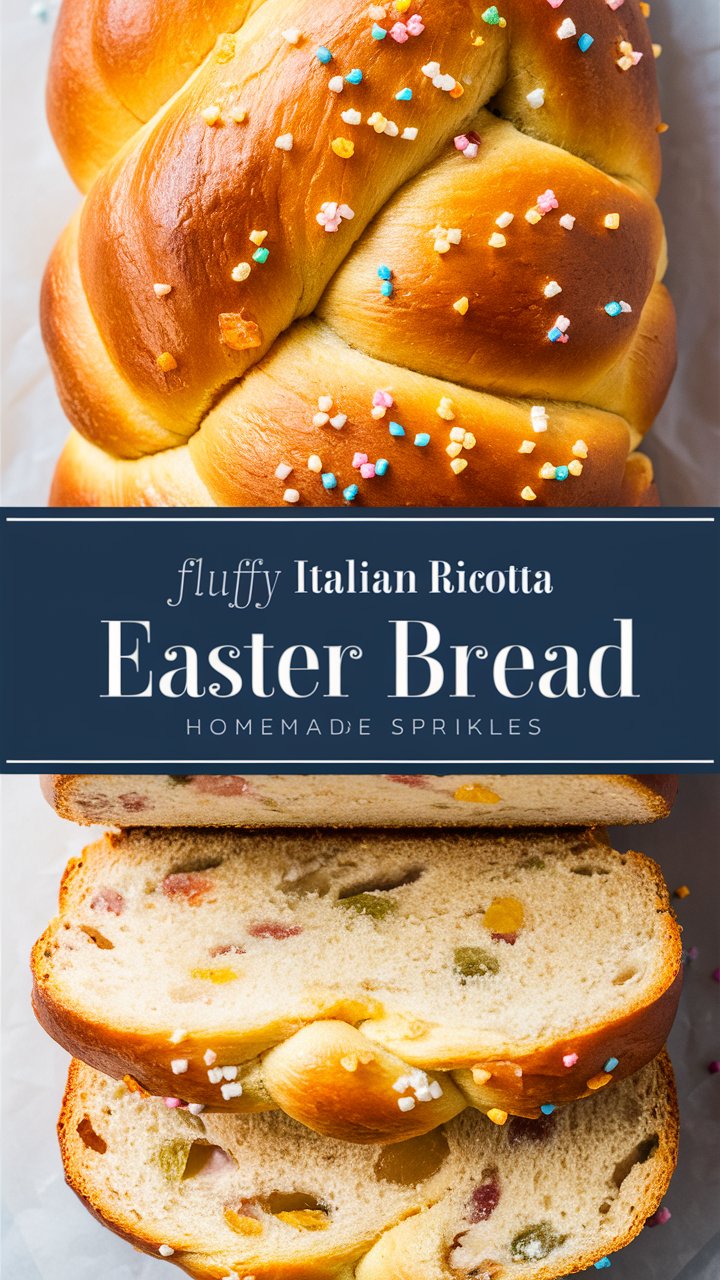
Easter in Italy is more than a religious celebration—it’s a feast of flavors, family, and tradition. Among the most cherished holiday recipes is Italian Ricotta Easter Bread—a soft, slightly sweet bread enriched with ricotta cheese. Unlike the classic Pane di Pasqua (Easter bread) that’s braided around colored eggs, the ricotta version has a tender, cake-like crumb with a subtle richness that makes it stand out on the holiday table.
This bread is more than just food—it’s a symbol of renewal, abundance, and togetherness. Whether you’re carrying forward a family tradition or starting a new one, baking this bread at Easter is a delicious way to celebrate the season.
History & Cultural Significance
Italian Easter bread has roots across many regions, each with its own twist:
- Southern Italy & Sicily often include ricotta or citrus zest, reflecting local ingredients.
- Northern regions lean toward brioche-like versions, flavored with butter and vanilla.
- Symbolism: Eggs represent rebirth, while ricotta symbolizes purity and abundance in spring.
While Pane di Pasqua often features braided dough with dyed eggs, the ricotta-based version is less about decoration and more about flavor. Families pass recipes down for generations, making this bread a centerpiece of Easter morning breakfasts.
Ingredients Breakdown (with Substitutions)
Here’s what makes this bread special:
- Ricotta cheese – Adds moisture, protein, and a creamy texture. Use whole-milk ricotta for best results.
- Flour – All-purpose works well, but bread flour creates more structure.
- Yeast – Gives the bread its airy rise. Instant or active dry yeast works.
- Eggs – Essential for richness and tradition (symbol of rebirth).
- Sugar – Balances the mild tang of ricotta. Swap with honey or coconut sugar if preferred.
- Citrus zest (lemon or orange) – A nod to Sicilian tradition, bringing brightness.
- Butter – Provides tenderness and depth.
- Optional add-ins – Candied fruit, anise seeds, or raisins for variation.
Substitutions:
- Gluten-free flour blends for those with sensitivities.
- Vegan ricotta & plant-based butter for dairy-free adaptations.
- Monk fruit sweetener for lower sugar content.
Step-by-Step Recipe: Italian Ricotta Easter Bread
Ingredients (makes 1 large loaf)
- 3 ½ cups all-purpose flour
- 1 packet (2 ¼ tsp) active dry yeast
- 1 cup whole-milk ricotta (room temperature)
- ½ cup sugar
- ½ cup warm milk (about 110°F / 43°C)
- ¼ cup unsalted butter, melted
- 3 large eggs (room temperature)
- Zest of 1 lemon (or orange)
- 1 tsp vanilla extract
- ½ tsp salt
Instructions
1. Activate the Yeast
- In a small bowl, combine warm milk, yeast, and 1 tsp sugar. Let it sit for 5–10 minutes until foamy.
2. Mix Wet Ingredients
- In a large bowl, whisk together ricotta, eggs, sugar, melted butter, vanilla, and citrus zest until smooth.
3. Combine & Knead
- Add the yeast mixture and gradually incorporate flour and salt.
- Knead for 8–10 minutes by hand or 5–6 minutes with a stand mixer, until the dough is soft and elastic.
4. First Rise
- Place dough in a greased bowl, cover, and let it rise in a warm spot until doubled in size (about 1–1.5 hours).
5. Shape the Dough
- Punch down the dough and shape it into a round loaf or braid. Place on a parchment-lined baking sheet.
6. Second Rise
- Cover and let the dough rise again until puffy (about 45 minutes).
7. Bake
- Preheat oven to 350°F (175°C).
- Brush with beaten egg for a golden crust.
- Bake 35–40 minutes, or until golden brown and cooked through (internal temp 190°F/88°C).
8. Cool & Serve
- Allow to cool slightly before slicing. Serve warm or at room temperature.
Pro Tips for Success
- Room temperature ricotta blends better into the dough.
- Don’t rush the rise—a slow fermentation develops flavor.
- Test with a thermometer—bread is done at 190°F (88°C).
- Storage: Wrap in plastic and keep at room temperature for 2 days, or freeze slices for up to 1 month.
Variations
- Traditional Style – Weave dyed eggs into the braid.
- Sweet Version – Add raisins, candied orange peel, or a glaze with sprinkles.
- Savory Twist – Incorporate Parmesan, black pepper, or herbs for a festive bread served with cheese and salami.
- Mini Loaves – Shape into smaller rounds or braids, perfect as Easter gifts.
Serving Suggestions
- Pair with butter, honey, or mascarpone.
- Serve alongside traditional Easter dishes: roast lamb, salami, and cheese platters.
- Present as a festive centerpiece with colored eggs and fresh flowers.
Nutritional Snapshot (per slice, approx.)
- Calories: 210
- Protein: 6g
- Carbs: 32g
- Fat: 7g
- Sugar: 9g
(Values vary based on ingredients used.)

Frequently Asked Questions
Q: Can I make this bread without yeast?
Yes—substitute with baking powder, though texture will be more cake-like.
Q: Can I use store-bought ricotta?
Yes, but drain excess liquid first for best results.
Q: How long does Ricotta Easter Bread stay fresh?
Up to 2 days at room temperature, or freeze for longer storage.
Q: Can I prepare it ahead of time?
Yes—shape the dough, cover, and refrigerate overnight. Bake the next day.
Conclusion
Italian Ricotta Easter Bread is more than a recipe—it’s a celebration of heritage, flavor, and family. With its tender crumb, subtle sweetness, and rich symbolism, it deserves a place at every Easter table. Whether enjoyed warm from the oven or shared with loved ones, this bread is a timeless reminder of renewal and joy.
Bake it this Easter and start your own delicious tradition.